
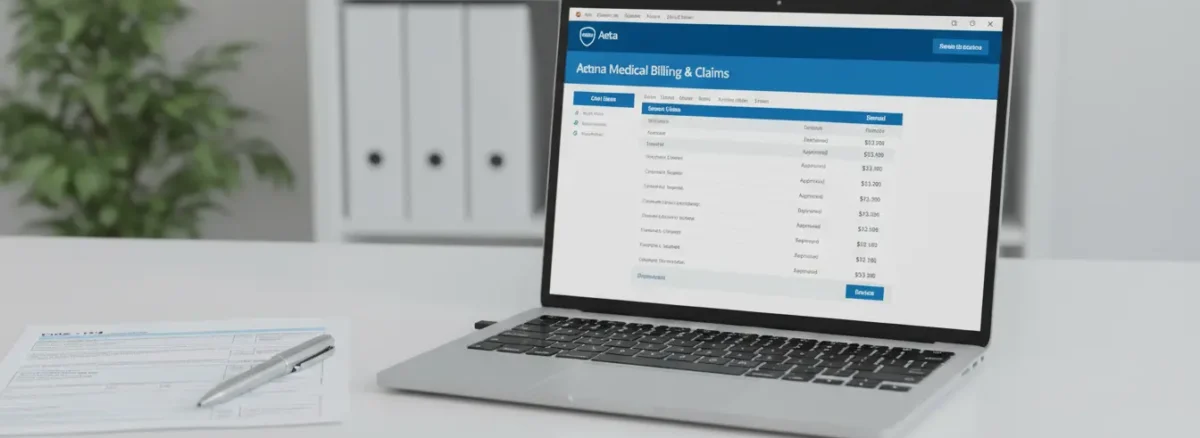
Aetna sets very strict rules for medical billing to make sure payments go to the right places and to stop fraud. These rules cover every step, from patient details to service codes, and they apply to doctors, clinics, and hospitals in their network. In this article, we’ll break down these rules in simple terms so you can send claims that get paid quickly and avoid headaches.
Even tiny errors, like a wrong code or missing patient info, can cause big problems. Your claim might get denied right away, or Aetna could hold payment for weeks or months while they sort it out.
For example, industry stats show that about 18-20% of all insurance claims get denied, and many of those denials come from small billing mistakes that Aetna catches fast. This delays your money, stresses your cash flow, and pulls staff away from patient care to fix errors.
By the end of this article, you’ll have clear steps to follow Aetna’s rules for clean claims, timely filing, and authorizations. You’ll learn how to spot common slip-ups and keep your billing smooth, so your practice gets reimbursements on time every time.
How does Aetna work?
Aetna is one of the biggest health insurance companies in the U.S., serving millions of people through different types of plans. They offer commercial plans for employer groups and individuals, Medicare plans for seniors and those with disabilities, and Medicaid plans in certain states to help low-income families get care.
Each plan has its own billing rules, and these can change based on your state or the specific contract your practice has with Aetna. For example, Medicare Advantage plans might need extra steps compared to standard commercial coverage.
Knowing Aetna’s setup helps your billing team pick the right codes and follow the correct process, so claims go through without surprises. This section keeps things simple—just the basics to get you started on smooth submissions.
Aetna Medical Billing Requirements Providers Must Follow
Aetna requires providers to nail the basics on every claim—correct patient details, provider info, and service descriptions—to keep things moving smoothly without rejections. Getting these right from the start means faster payments and less time fixing errors.
Here are the key requirements your team must follow:
- Accurate patient information: Include the patient’s full name, member ID, date of birth, and policy number exactly as shown on their Aetna card—double-check during registration to match eligibility data.
- Provider details: Use your National Provider Identifier (NPI), tax ID (TIN or SSN), and service address; Aetna cross-checks these against their enrollment files for instant validation.
- Service descriptions: List dates of service, CPT/HCPCS procedure codes, ICD-10 diagnosis codes, and any needed modifiers to clearly show what care was given.
- In-network status: Confirm your practice is active in Aetna’s network via their portal before billing—out-of-network status cuts reimbursements and shifts costs to patients.
Sticking to these simple rules builds clean claims that Aetna processes quickly, helping your practice collect reliably without surprise denials.
Aetna Clean Claim Submission Rules
Aetna defines a clean claim as one that’s complete, accurate, and ready for payment without extra requests or fixes—think of it as a claim that passes their automated checks on the first try.
These claims get processed in just 14-30 days, while messy ones sit in review for months, delaying your cash flow.
To submit a clean claim to Aetna, include these must-have elements every time:
- Correct CPT and HCPCS codes: Match the exact procedure or service performed, like 99213 for a routine office visit—use the latest codes from Aetna’s updates to avoid “invalid code” rejections.
- ICD-10 diagnosis codes: Link the reason for the visit (like E11.9 for diabetes) directly to the service; missing or mismatched codes account for 40% of denials.
- Modifiers when needed: Add things like -25 for separate E/M services on the same day, or Aetna bounces the claim back for clarification.
- Service dates and patient details: Exact “from-to” dates, member ID, and provider NPI—anything off by a digit triggers an automatic scrub failure.
Clean claims mean faster reimbursements and fewer staff hours spent on appeals. Train your coders on these rules, and run a pre-submission scrub to catch issues early for smoother Aetna medical billing.
Common Aetna Billing Errors That Lead to Denials
Aetna denies claims quickly when simple errors slip through, turning valid services into unpaid bills that your team must refile or appeal. These mistakes waste time and hurt cash flow, but knowing them helps you prevent most denials upfront.
Here are the top errors that trigger Aetna rejections:
- Incorrect or missing diagnosis/procedure codes: A wrong ICD-10 code (like using Z00.00 for a sick visit) or missing CPT (such as 99203 without a matching diagnosis) fails Aetna’s edits, causing 30-40% of denials.
- Eligibility or coverage issues: Billing an inactive policy or non-covered service without checking sends claims straight to denial—always verify patient status in Aetna’s portal first.
- Missing authorizations or referrals: Services like MRIs or specialist visits need prior approval; skipping this leads to instant “non-authorized” denials, even if the care was needed.
- Duplicate or late claim submissions: Sending the same claim twice or past the timely filing window (often 90-180 days) gets auto-rejected—Aetna flags these as errors right away.
Spot these issues during your billing review, and train staff to double-check before submission. This cuts denials in half, keeping reimbursements coming steadily to support your practice.
Aetna Timely Filing Limits & Claim Submission Guidelines
Aetna has clear deadlines for submitting claims, called timely filing limits, to keep payments fair and organized. Miss these windows, and even perfect claims get denied—no appeals allowed—which can mean losing thousands in reimbursements your practice earned.
Here’s what you need to know in simple terms:
- Timely filing limits: Most Aetna plans give you 90 days from the service date for commercial claims, up to 180 days for Medicare plans—check your contract, as states like California might extend to 180 days across the board.
- Electronic vs. paper claims: Submit electronically via Aetna’s portal or clearinghouses like Availity for faster processing (often 14 days); paper claims take longer and have shorter limits, like 60 days for some plans.
- Track submission dates: Use your billing software to log every claim’s date and confirmation number—Aetna provides receipts, so save them to prove you filed on time if disputes arise.
Always verify limits per patient plan during eligibility checks, and set reminders 30 days before deadlines. This simple habit stops lost revenue and keeps your cash flow steady without surprise denials.
Aetna Documentation & Authorization Requirements
Aetna requires solid proof behind every claim through prior authorizations and detailed records, ensuring services match medical needs before it pays. Skipping these steps leads to denials or payment clawbacks, even months later, so your team stays ahead by checking upfront.
Here’s how to handle them right:
- When prior authorization is required: Get approval for high-cost services like MRIs, surgeries, or infusions—Aetna’s precert list covers hundreds of CPT codes; check their portal or call before scheduling to avoid “non-authorized” rejections.
- Documentation needed to support billed services: Keep charts with progress notes, test results, and treatment plans that tie directly to your ICD-10 and CPT codes—generic notes won’t cut it during audits.
- How missing documentation affects payments: Aetna requests records on 10-15% of claims; no response within 30 days means full denial, plus possible overpayment demands that tie up your revenue.
Build a quick checklist into your workflow—verify auths at check-in and scan docs into your EHR. This keeps claims clean, payments prompt, and your practice free from Aetna surprises.
How MedAce Healthcare Helps Providers Stay Compliant With Aetna Billing
MedAce Healthcare takes the stress out of Aetna billing by handling the details that trip up most practices, ensuring your claims meet every rule for fast, full payments. Their team of experts checks eligibility, scrubs codes, and secures authorizations upfront, so you submit clean claims that Aetna approves on the first pass.
With MedAce, practices see real results—denial rates drop by 40-50%, timely filing stays perfect, and reimbursements arrive 20-30 days faster on average. They manage documentation requests and appeals, too, freeing your staff to focus on patients instead of paperwork battles.
Partner with MedAce for worry-free Aetna compliance that boosts your cash flow and revenue cycle. Contact them today to simplify billing and get paid what your practice deserves.
Frequently Asked Questions (FAQs)
1. What exactly is a “clean claim” according to Aetna?
A clean claim is a medical bill that contains all the necessary information for Aetna to process it immediately through their automated systems without needing extra details. This means the patient’s ID, the provider’s NPI, and the specific procedure and diagnosis codes must be perfectly accurate. When a claim is submitted without errors, it is usually processed much faster, often within 14 to 30 days, whereas a messy claim might be delayed for months.
2. How long do I have to submit a claim to Aetna before it expires?
The deadline for submitting a claim, known as the timely filing limit, depends on the specific type of plan the patient has. For most standard commercial plans, you typically have 90 days from the date the service was provided to get the claim in. However, if you are billing for a Medicare Advantage plan, you might have up to 180 days. It is vital to check your specific contract or state laws, as missing these deadlines usually results in an automatic denial that cannot be appealed.
3. Why does Aetna deny claims even when the medical service was necessary?
Most denials happen because of administrative errors rather than a lack of medical need. Common reasons include using an outdated or incorrect diagnosis code, submitting a claim for a patient whose insurance policy is no longer active, or failing to get a referral or authorization before the visit. Even a tiny typo in the patient’s member ID number can trigger an automatic rejection, which is why double-checking details during the registration process is so important.
4. When do I need to get prior authorization from Aetna?
Aetna requires prior authorization for high-cost or specialized services to ensure the treatment meets its specific medical necessity guidelines. This usually applies to procedures like MRIs, major surgeries, and certain types of medication infusions. You should always check Aetna’s “precertification list” on their provider portal before scheduling a patient. If you perform these services without getting approval first, Aetna will likely deny the payment entirely, regardless of how well the procedure went.
5. Is there a difference between submitting paper claims and electronic claims?
Yes, Aetna strongly prefers electronic submissions through portals like Availity because they are faster and less prone to being lost. Electronic claims are often processed in about two weeks, while paper claims take much longer to handle manually. Additionally, some plans have shorter filing deadlines for paper submissions, so using digital tools is the best way to ensure your practice gets paid on time and has a digital receipt to prove when the claim was sent.
6. How can a billing service like MedAce Healthcare help with Aetna claims?
A professional billing service helps by taking over the complicated “behind-the-scenes” work, like checking patient eligibility and scrubbing codes for errors before they are sent to Aetna. They act as a safeguard to ensure every claim meets Aetna’s strict rules, which can significantly lower your denial rates and speed up your reimbursements. By handling the paperwork and any necessary appeals, they allow your medical staff to spend more time focusing on patient care instead of administrative battles.
2 Comments